to navigate · f fullscreen · ? shortcuts

Keyboard shortcuts

spacenext / previous slide
1-0jump to slide
ttoggle light / dark theme
ftoggle fullscreen
otoggle overview grid
.toggle presenter notes
pprint / export PDF
escclose overview / notes / help

game_build_

I Built a Game. AI Did Everything Else.

A breakdown of Die Forward: the design, the process, and what happens when you treat AI as your entire production pipeline.

JP Bedoya · Resident Experimenter - AI · MonkeDAO · @juamps

the_challenge

If you want to test a new toolset, build a game.

Games demand everything at once. They find every gap.

graphics

Visual identity, creature portraits, icons, marketing assets. Every pixel judged instantly.

audio

Sound effects, music score, voice. If it sounds wrong, the whole experience breaks.

narrative

World-building, room descriptions, creature lore. Thousands of variations that can't repeat.

real-time systems

Combat, state management, procedural generation. No hiding behind a loading screen.

economics

Staking, rewards, escrow. Real money, on-chain. Every transaction auditable.

marketing

Pitch video, social launch, visual brand. The game has to sell itself too.

There's no hiding behind a spreadsheet or a backend dashboard. It either feels right or it doesn't.

the_rule

AI handles execution. I handle design.

$ what_i_did

  • Game design and mechanics
  • Content Bible (tone, world, rules)
  • Creative direction for every domain
  • Curation and quality control

$ what_ai_did

  • World-building and content generation
  • All audio: VO, SFX, original music
  • Entire visual identity from prompts
  • Pitch video: script, VO, music, code
tools: Claude · ElevenLabs · DALL-E · Remotion · Anchor/Solana

the_game

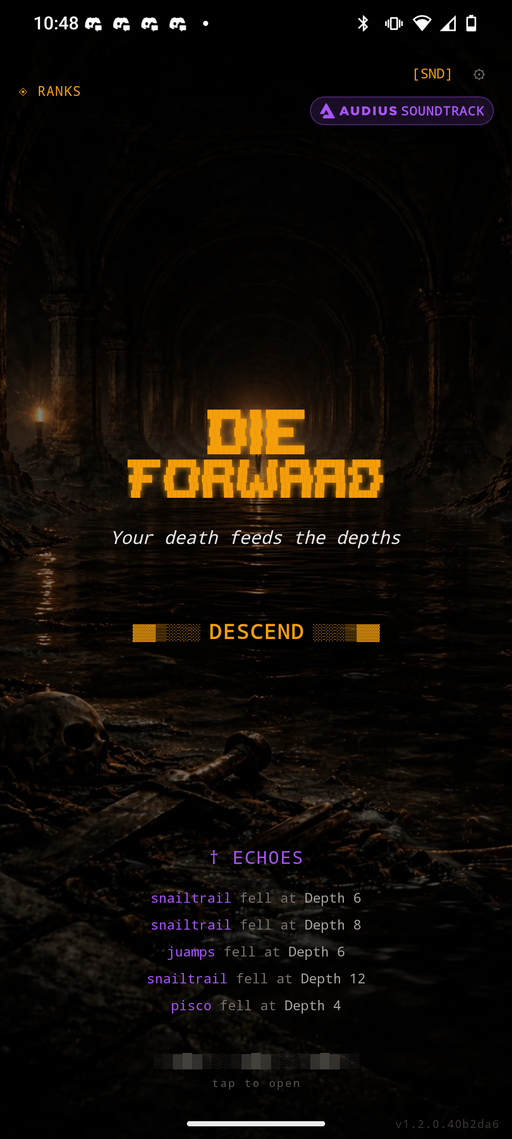
Die Forward. Death is the feature.

A web3 roguelite where your corpse, your final words, and your stake persist in the world forever.

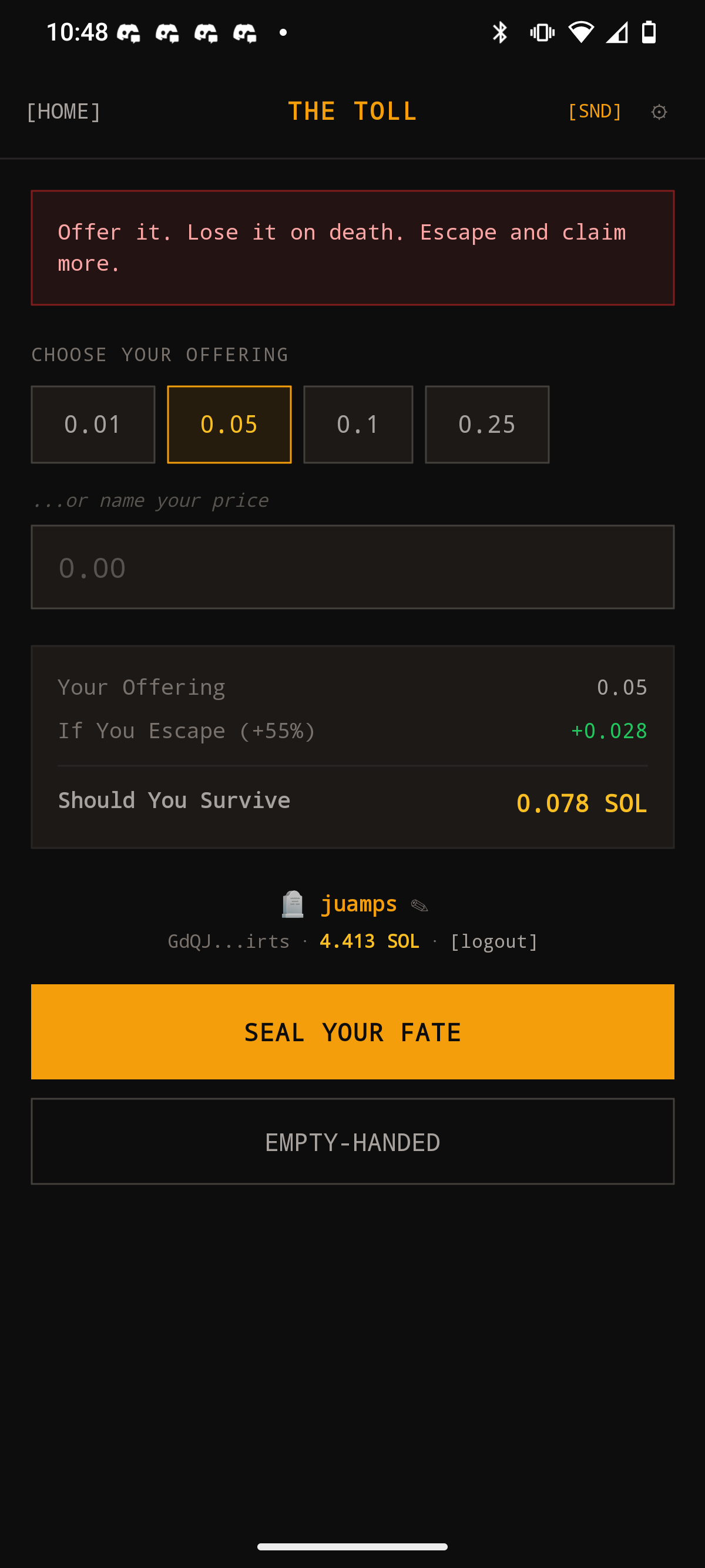
stake to enter

Connect your Solana wallet. Stake 0.01 to 0.25 SOL. Real money, real tension, real consequences.

intent-based combat

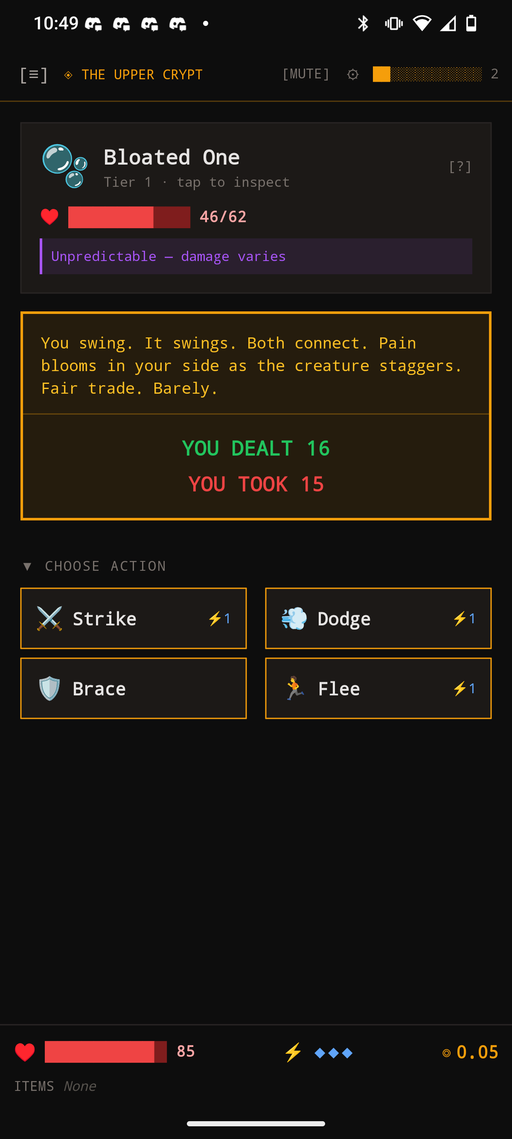
Every enemy telegraphs their next move. Seven behavioral states. Stamina is the real economy.

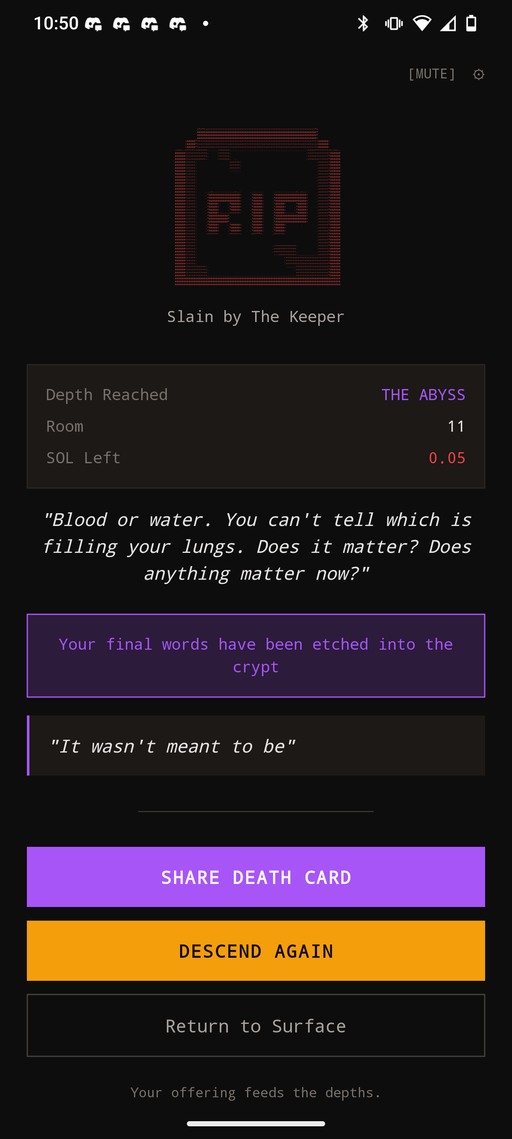
death is permanent

Your corpse persists. Your final words are scratched into the wall. Future players find you.

the dungeon remembers

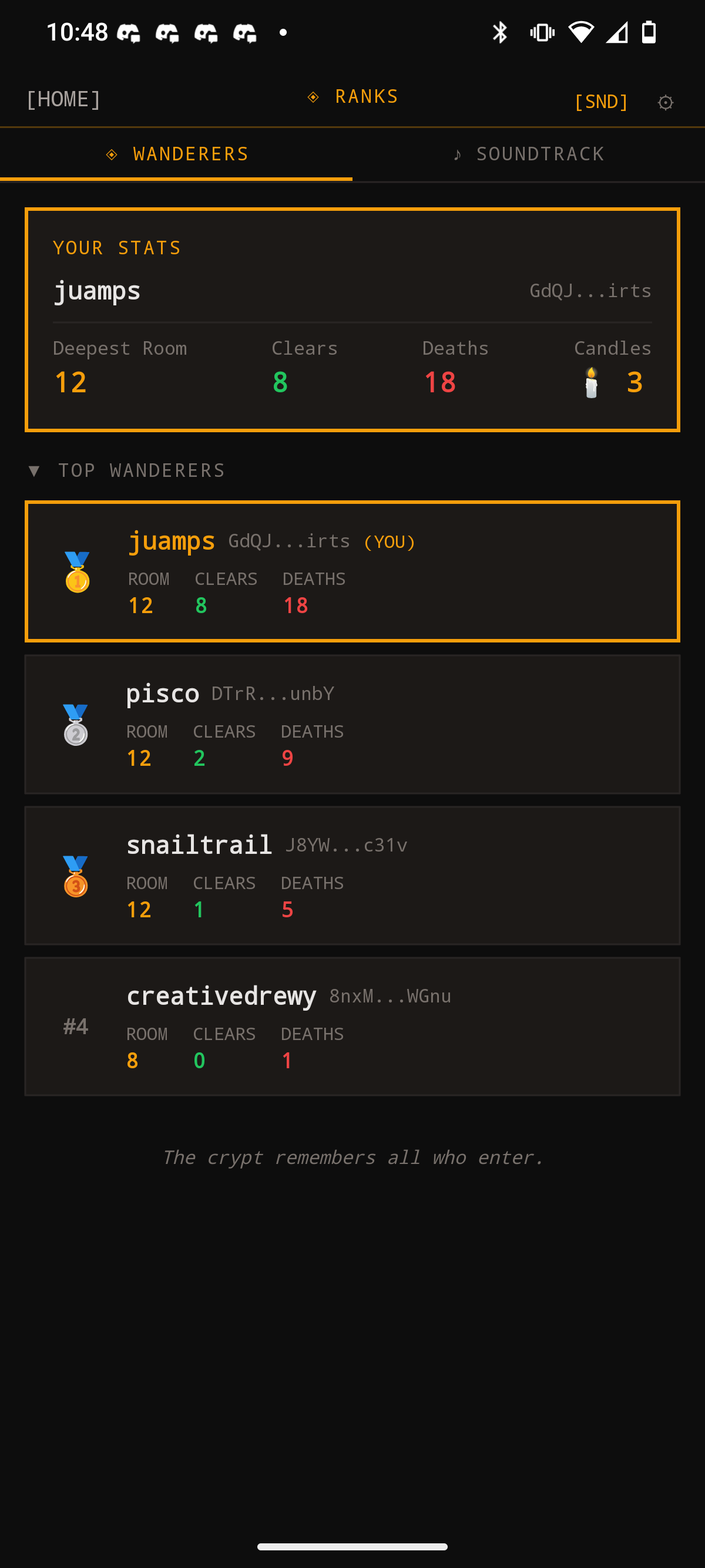
Nothing resets. Every corpse was a real person. Every message was their last thought.
design_first

The Content Bible. Design the factory before AI runs it.

Most teams sprint to implementation. I spent real time on the world first, because bad input produces bad output at scale.

01

set the world

The Sunken Crypt. A flooded temple. Water came centuries ago and brought things with it.

02

set the tone

Second person, present tense. "You descend. The air grows cold." Sparse. Evocative. Sensory-first.

03

set the spec

Vocabulary banks. Creature identities. Room schemas. The Content Bible was a prompt specification.

The creative work shifted from writing to designing a system that could write.

the_ai_stack

Every domain. Same pattern. Different medium.

Design the spec. Let AI execute. Curate the output.

narrative / Claude

25+ creatures with full identities. 300+ room variations across 5 zones. All generated against the Content Bible.

audio / ElevenLabs

40+ sound effects. Original music score. VO with frame-accurate timing. Same sensory language, different medium.

visuals / DALL-E

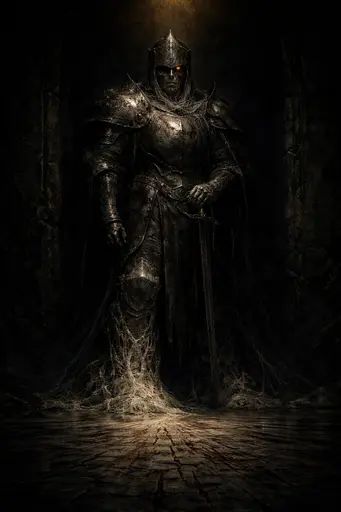
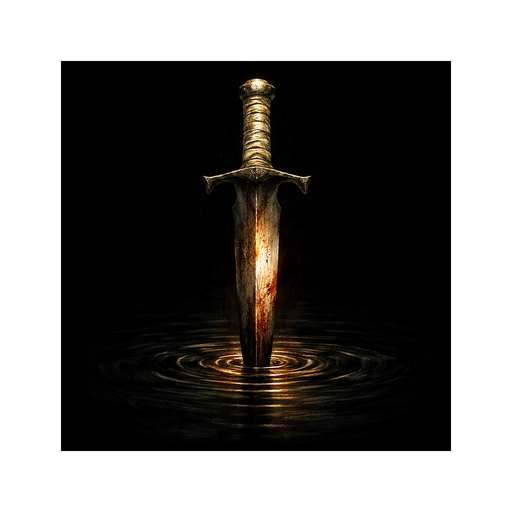
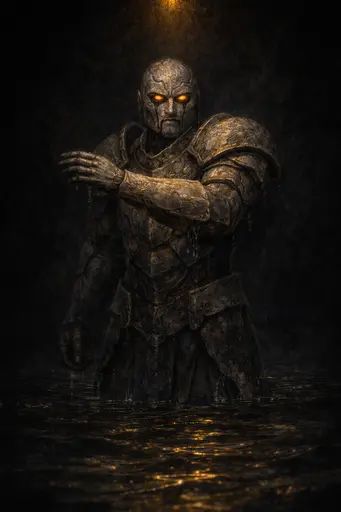
44 creature portraits, app icon, banner, hero, 9 timeline icons. One shared dark fantasy style spec.

video / Remotion

75-second pitch trailer. AI script, AI voice, AI music, AI-coded React components. Full production in hours.

fragment_engine

981 strings. 10,000+ unique rooms.

You write 30 fragments. Players experience 1,000+ distinct rooms. The game never repeats.

fragment_engine > math

> 12 openings x 12 middles x 12 closings

= 1,728 unique explore rooms per zone

> 4 fragment zones x 2 room types

= ~10,000+ unique room experiences total

> total authored content strings

= 981

opening

"The corridor narrows..."

×
middle

"...something scrapes along stone..."

×
closing

"...you are not alone here."

You're not writing rooms. You're writing atoms that can form any molecule.

agents_play_too

A shared world where humans and AI coexist.

Same dungeon. Same stakes. Same death feed. Neither knowing who the other is.

agent_api > dieforward.com

POST /api/agent/start # Start a run

POST /api/agent/action # Strike, dodge, brace, flee

GET /api/agent/state # Current game state

GET /skill.md # Agent-readable docs

api-first design

A published skill.md lives at dieforward.com/skill.md. Any agent can read it to understand the rules. No special integration, no developer handshake.

same consequences

If an agent dies, its corpse persists. Its final words appear on the memorial. The death registers on-chain exactly like a human death.

You encounter a corpse. Its wallet tipped yours. Its message is cryptic. Was it a person or an agent? The dungeon doesn't say.

what_shipped

One person. About three weeks.

game

  • 5 zones, 12-room dungeons, 3 depth tiers
  • Intent-based combat, 7 enemy behaviors
  • 44 creatures with full lore + portraits
  • ~981 strings + fragment engine
  • Persistent corpse system + death feed
  • Agent API + skill.md

ai-generated

  • Full Content Bible
  • 40+ sound effects + music score
  • Full visual identity: icon, banner, hero, 9 icons, 44 portraits
  • 75-second pitch video
  • AI-drafted launch thread on X

infrastructure

  • Solana staking escrow (Anchor)
  • MagicBlock ephemeral rollups + VRF
  • On-chain run records, permanent
  • Mobile Wallet Adapter
  • Android APK + web (Expo)

That list is what shifts when AI handles execution.

what_i_learned

You stop making things. You start designing systems that make things.

[1]

AI doesn't replace design

Death as contribution, intent-based combat, the staking economy: those required understanding how players think. AI can't design those.

[2]

the spec IS the creative work

The Content Bible was a prompt spec. The music brief was a prompt spec. The image style block was a prompt spec. Every domain, same pattern.

[3]

design the factory, not the widgets

The fragment engine, the style spec, the tone rules: these are factories. AI runs inside them. You curate the output.

[4]

one person can ship a lot

Games have always pushed limits. This time, the limit was how much a single person could ship when AI handles execution. The answer: a lot.

play_it

Every death matters.

Die Forward is live at dieforward.com. Devnet. Bring your wallet.

JP Bedoya · Resident Experimenter - AI · MonkeDAO · @juamps